 (opens the full-size plate in a new tab)
Champy
Sea Serpent
The 1977 Mansi photograph remains unresolved, and the lake has produced nothing else.
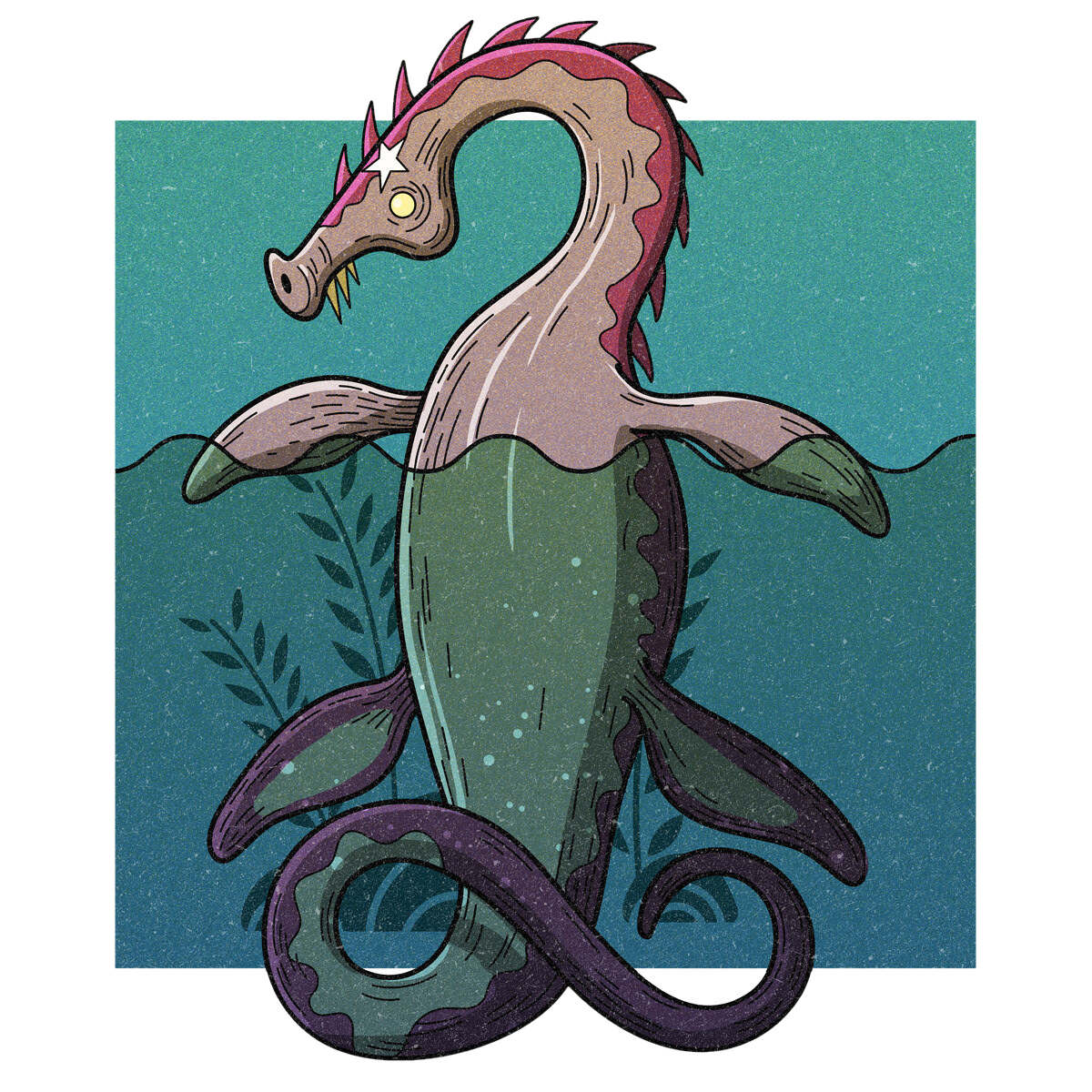
A massive, horned sea serpent of Lake Champlain whose biological defenses include sinking vessels and emitting an aura that distorts photographic evidence.
Etymology. Centuries ago, the indigenous Mohawk and Iroquois people named the creature 'Onyare'kowa'.
Anatomy. It is a massive, dark serpentine monster measuring up to 187 feet in length. Historic 1819 accounts describe a head similar to a horse, featuring three teeth, eyes the color of peeled onions, a red belt around its neck, and a distinct white star on its forehead.
Ecology. Endemic to the 125-mile-long freshwater ecosystem of Lake Champlain, shared between New York and Vermont.
Behavior. It exhibits evasive aquatic behaviors, swimming swiftly just below the surface. In 2003, scientific researchers recorded sounds within the lake matching the echolocation of beluga whales or dolphins, despite neither species existing in the lake, suggesting the beast utilizes advanced biological sonar.
Mythology. French cartographer Samuel de Champlain is falsely credited with the first sighting in 1609 due to a mistranslated 1970 magazine article. Its legend captured the attention of P.T. Barnum, who offered a $50,000 reward for its capture in the 19th century.