 (opens the full-size plate in a new tab)
Shunka Warak'in
Canine Predator
A similar animal shot in 2018 was DNA tested and returned an ordinary grey wolf.
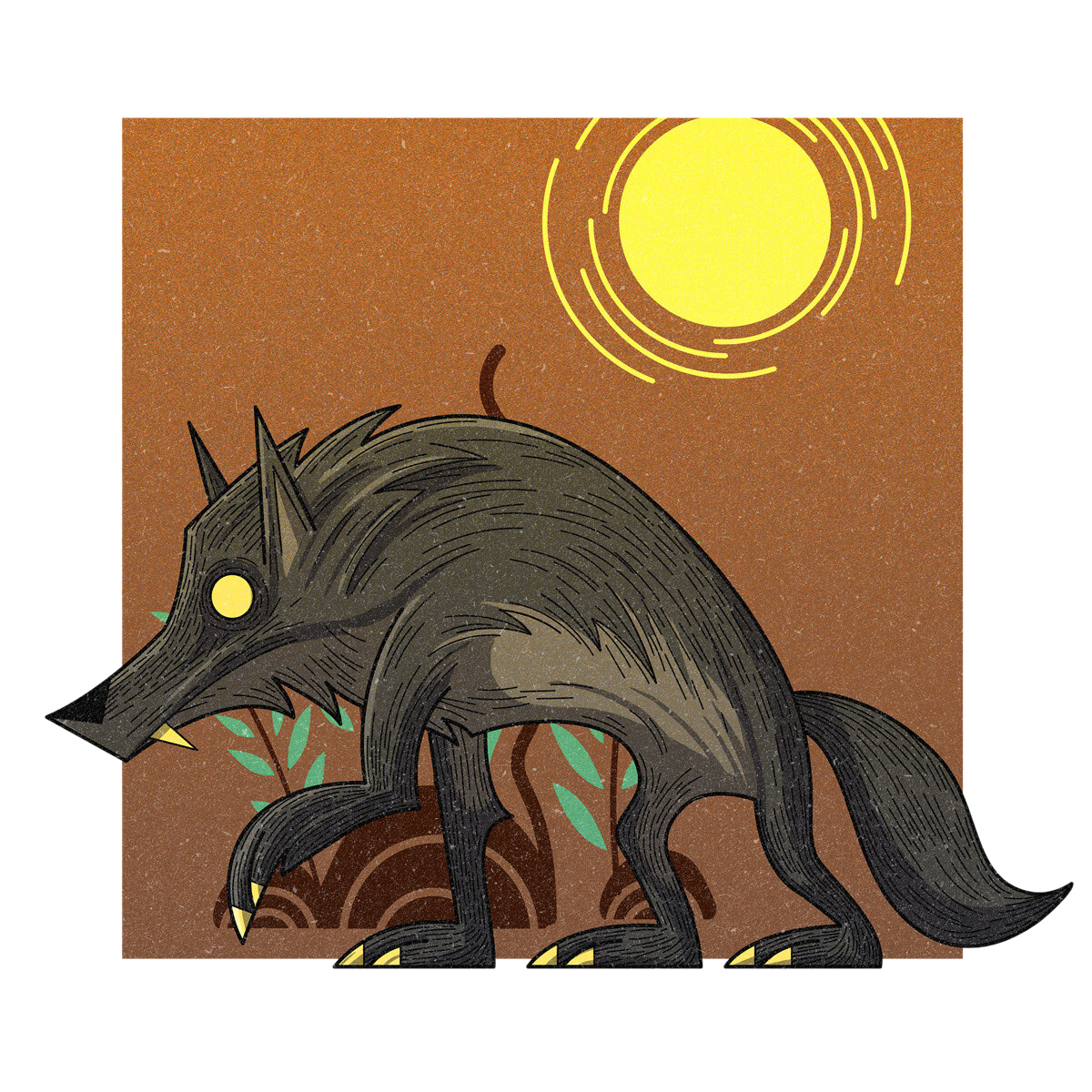
A hyena-like canine predator whose genetic lineage fueled intense debate after infiltrating Native American settlements, before DNA testing finally proved it to be a mundane wolf.
Etymology. Derived from the Ioway Sioux myth 'shunka warak'in', which translates directly to 'carries off dogs'. Amateur taxidermist Joseph Sherwood dubbed it a 'ringdocus'.
Anatomy. It is a freakish, wolf-like beast with a nearly black coat bearing a hint of stripes on its flanks. Biologically, it features unusually short legs and a sloped back heavily resembling an African hyena.
Ecology. Native to the Madison Valley of the Rocky Mountains in Montana.
Behavior. A hyper-aggressive predator that actively snatched unwary dogs and attacked homestead livestock. When fatally wounded, it produced a terrifying, feminine scream and violently thrashed itself to death attempting to kill a pioneer family.
Mythology. Shot by Israel Hutchins in 1886, its taxidermy mount became a legendary museum oddity. Modern cryptozoologists insisted it was an undocumented prehistoric survivor, but a similar beast shot in 2018 underwent DNA analysis and was proven to be nothing more than an ugly, purebred grey wolf.