 (opens the full-size plate in a new tab)
Teratorns
Prehistoric Avian
Teratornis merriami is real and extinct. Reports of living birds are unverified.
A colossal, prehistoric avian predator with a twelve-foot wingspan whose factual biological history has been co-opted into modern cryptid mythology.
Etymology. Derived from the Greek 'teras' (wonder or monster) and 'ornis' (bird), scientifically classified as Teratornis merriami.
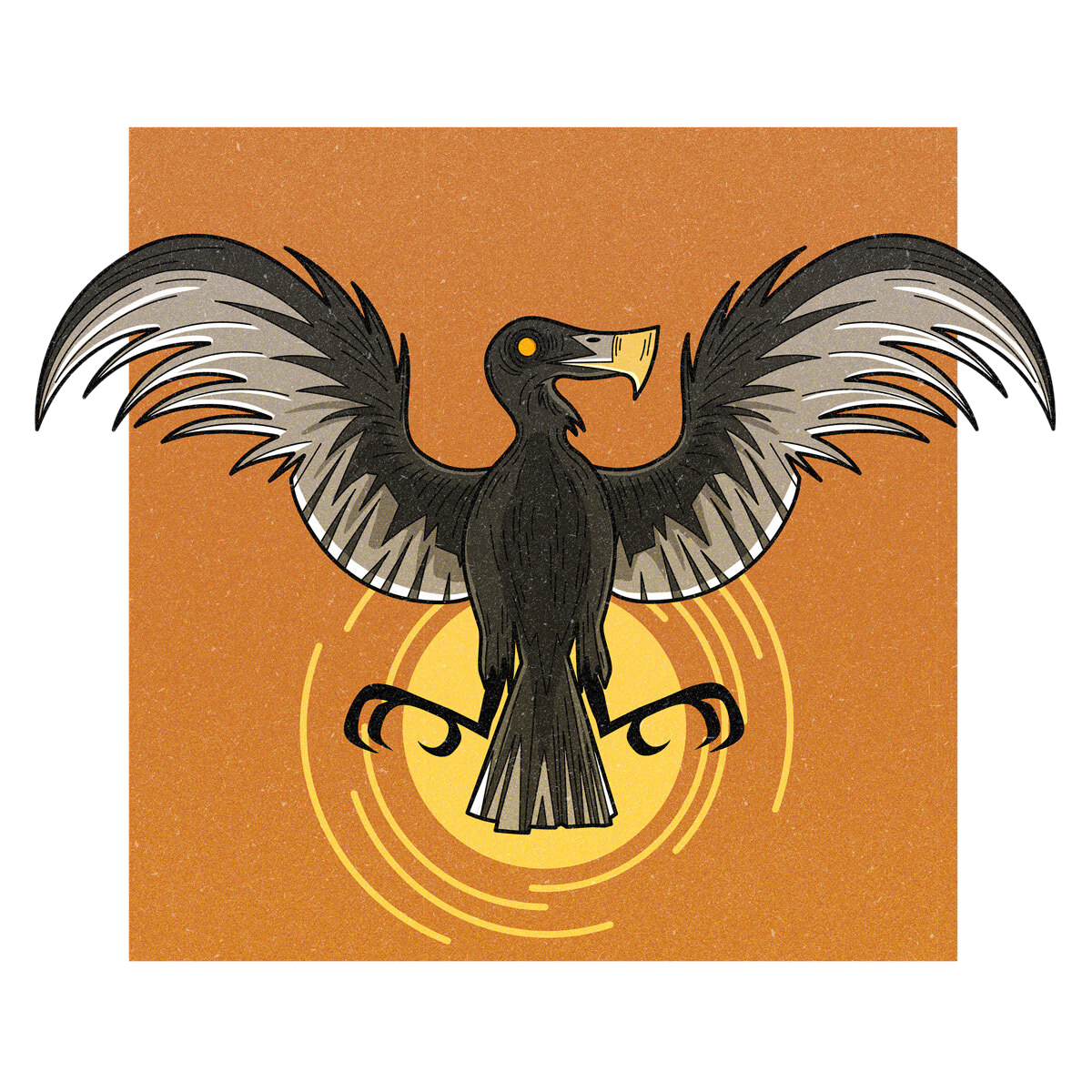
Anatomy. It was an airplane-sized predatory bird possessing an enormous wingspan of up to 12.5 feet, standing 30 inches tall, and weighing roughly 30 pounds. Biologically, its massive hooked beak allowed it to swallow small prey entirely whole.
Ecology. An apex aerial predator of Pleistocene North America that thrived in cliff terrains to facilitate easy take-offs, relying heavily on terrestrial megafauna carrion.
Behavior. It acted as an active predator and a heavy scavenger. It possessed legs too short to take flight by running on flat ground. It frequented the La Brea Tar Pits, utilizing its large bill to open the body cavities of trapped megafauna before becoming mired in the asphalt itself.
Mythology. Although a completely factual, scientifically documented bird that went extinct 10,000 years ago, cryptid enthusiasts persistently claim the dinosaur refused to stay extinct and continues to fly through the modern skies of the Southwest.