 (opens the full-size plate in a new tab)
White Thang
Hominid / Ursine
Skeptics read the reports as albino bears. The legend behaves like a ghost story.
An elusive, stark-white bipedal hominid native to the humid forests of Alabama whose ghostly appearance fuels deep-rooted rural superstitions.
Etymology. Colloquially named the 'White Thang' by locals.
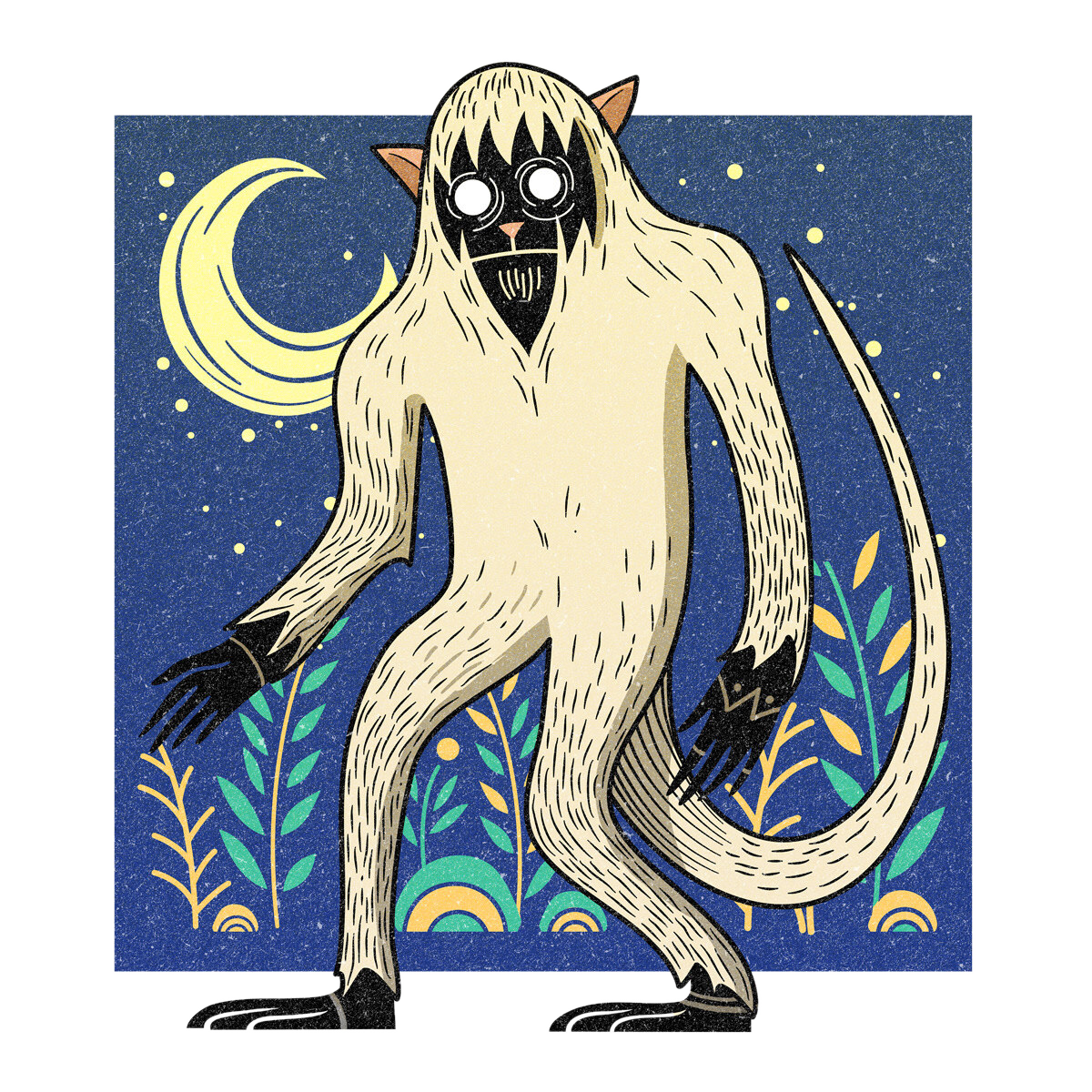
Anatomy. A tall, powerfully built bipedal entity covered entirely in stark white or pale luminous fur. Observers note its unnerving ability to move with complete silence and fluidity through dense undergrowth, and inexplicably emits a low, guttural growl that resonates through the ground, accompanied by a distinct musky odor.
Ecology. Native to the dense woodlands of Morgan, Etowah, and Jefferson counties, as well as the remote, heavily wooded, and swampy regions of the Black Warrior National Forest.
Behavior. An elusive, silent observer that prefers to remain hidden in the dense wilderness. It establishes its territory by leaving large white footprints in soft earth and emitting mournful, soul-piercing howls after dark.
Mythology. Documented sightings since the 1940s have fueled local debates over its true nature, with skeptics attributing the encounters to albino bears, while others believe it to be an albino variant of Bigfoot. It serves as a potent, chilling reminder that even in our modern, seemingly explored world, pockets of profound mystery remain.